
Climate / Weather
NASA tracks late-season typhoons across the Northwest Pacific
Late-October satellite observations show In-fa near the Mariana Islands and the remnants of Champi moving toward Alaska.
Status: source-checked.
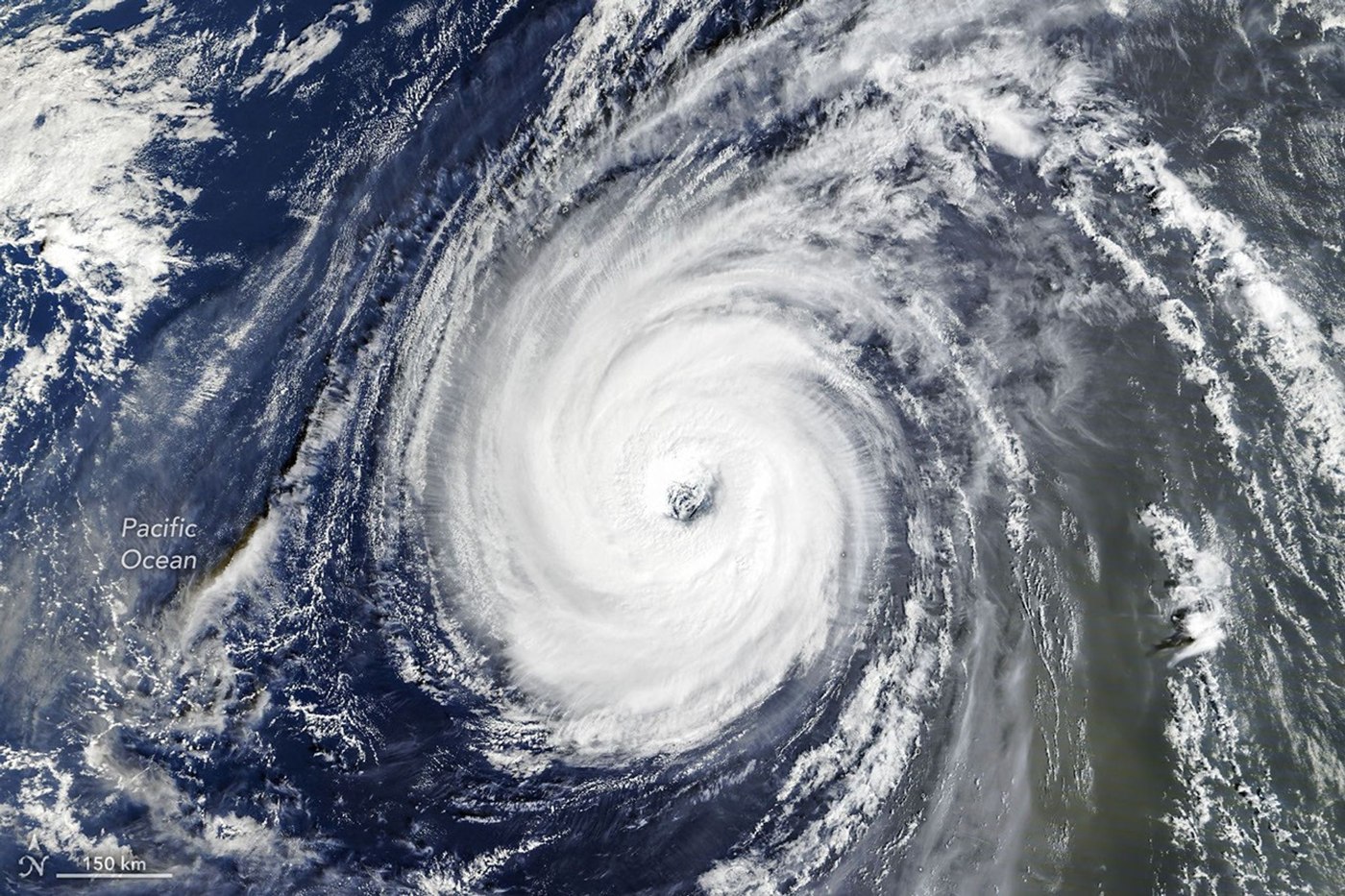
NASA satellite images captured Oct. 29 and 30 showed Super Typhoon In-fa near the Mariana Islands, while the remnants of another typhoon approached Alaska, the agency’s Earth Observatory reported Nov. 3.
The images document a busy season in the Northwest Pacific. NASA said activity had been elevated since Super Typhoon Sinlaku struck in April, with 25 named storms following it. In-fa was the fifth typhoon to affect the Mariana Islands this year, according to the agency.
A Terra satellite image taken Oct. 30 showed In-fa just west of the island chain with a large eye and a nearly circular shape. NASA described those features as characteristic of an annular storm, a type that typically lacks the prominent outer rainbands seen in other tropical cyclones. Such storms can hold their strength longer in unfavorable conditions, the agency said.
The wider satellite view also showed the remnants of Typhoon Champi entering the Bering Sea’s storm track. NASA meteorologist Gary Partyka said the remnants appeared to have become intertwined with an existing midlatitude system and helped intensify it. Unlike tropical cyclones fueled by warm ocean water, these systems draw energy from contrasts between warm and cold air, NASA explained.
Partyka identified the strong El Niño in the Pacific as a likely contributor to the season’s activity. He also cautioned that a storm’s transition away from a tropical system can spread its winds over a larger area without necessarily making them stronger. The images describe late-October conditions, not the storms’ current positions.
What we know / what we don't
What we know
- In-fa is the fifth typhoon to affect the Marianas in 2026, per NASA.
What we don't know
- Damage from In-fa is not described in the source.
The source record